If you have ever wondered how surgical instruments stay safe and ready for use inside a hospital, the answer lies in a behind-the-scenes role that most patients never see. This role is carried out by sterile processing technicians, the professionals responsible for making sure every tool used in surgery is properly cleaned, inspected, assembled, and sterilized before it reaches an operating room.
At its core, what does a sterile processing technician do can be summed up as managing a highly structured workflow that transforms contaminated surgical instruments into fully sterile, patient-ready equipment. It is a job built on precision, repetition, and a deep commitment to patient safety. In this article, we will break down exactly how this process works from start to finish so you can clearly understand what does a sterile processing technician do in a hospital environment.
The Central Workflow of Sterile Processing
Before diving into each individual task, it is important to understand that sterile processing is not a random collection of duties. Instead, it is a continuous and tightly controlled workflow. Each stage depends on the one before it, and a mistake in any step can affect patient safety in the operating room.
So when someone asks what does a sterile processing technician do, the most accurate answer is that they manage this chain of steps every single day:
- Decontamination
- Inspection and testing
- Assembly of instrument sets
- Wrapping and packaging
- Sterilization
- Quality control and documentation
- Case cart preparation
Each stage is essential and must be completed with consistency and accuracy.
Decontamination: The First Critical Step
The process begins the moment surgical instruments return from the operating room. At this point, they are considered contaminated and may contain biological material from procedures. This is where sterile processing technicians step in.
To begin, technicians put on full personal protective equipment, including gloves, gowns, masks, and eye protection. Safety is essential because they are handling instruments that have been inside a patient’s body.
Instruments are then sorted and cleaned. Some go through automated washer disinfectors, which use controlled heat and cleaning cycles. Others must be manually scrubbed, especially items with hinges or narrow channels where debris can remain trapped.
If this step is not done correctly, everything that follows is compromised. That is why understanding what does a sterile processing technician do always starts with recognizing how important decontamination is to the entire workflow.
Inspection and Function Testing
Once instruments are cleaned, they move to inspection. This is one of the most detail-focused parts of the job.
Technicians carefully examine each instrument for signs of damage such as cracks, corrosion, discoloration, or worn edges. Even small imperfections can make a tool unsafe for surgery.
But inspection is not just visual. Function testing is also essential. For example:
Clamps are opened and closed to ensure they lock properly
Scissors are tested to confirm they cut cleanly
Needle holders are checked to ensure proper alignment and grip
Good lighting and magnification are often used because some defects are extremely small. Over time, technicians develop a trained eye for spotting issues quickly.
This stage reinforces what does a sterile processing technician do because it highlights the responsibility of ensuring every instrument is safe before it reaches a patient.
Assembly of Surgical Instrument Sets
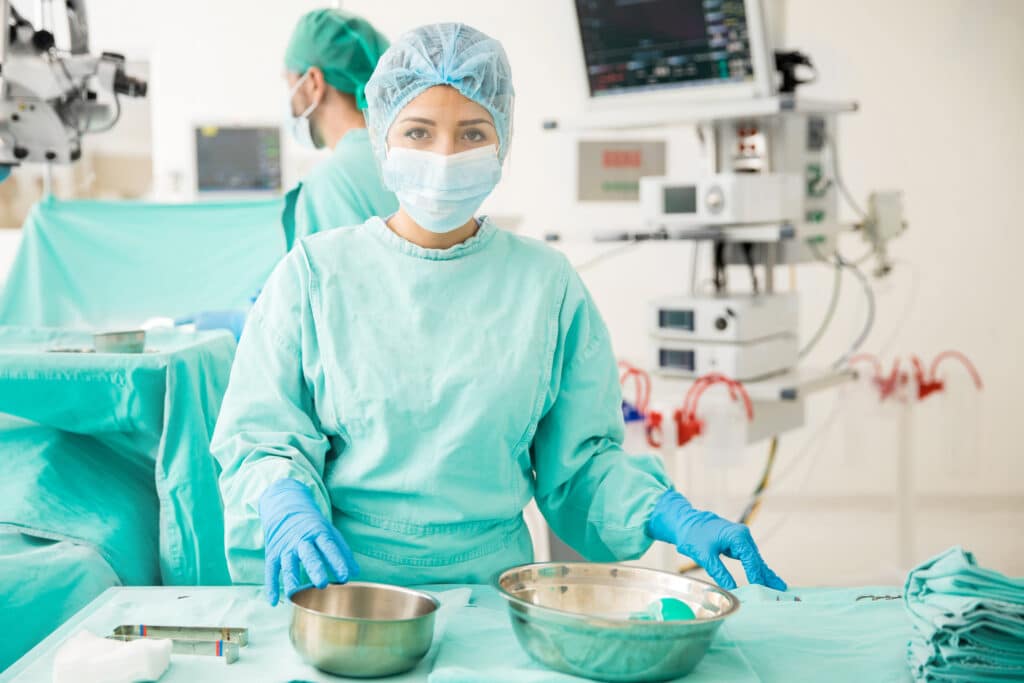
After inspection, instruments that pass quality checks are organized into surgical sets. These sets are used for specific procedures such as orthopedic surgery, cardiac operations, or general surgery.
Each set follows a detailed instruction sheet that lists exactly which instruments are required and how they should be arranged. Some trays may contain 20 to 40 instruments, while complex surgical sets may contain more than 80 individual items.
Technicians must carefully follow these instructions and verify that every piece is present. Even a single missing instrument can delay surgery or create risk in the operating room.
This step is where organization and accuracy become especially important. When people ask what does a sterile processing technician do, this is one of the clearest examples of precision work that directly supports surgeons during procedures.
Wrapping and Packaging
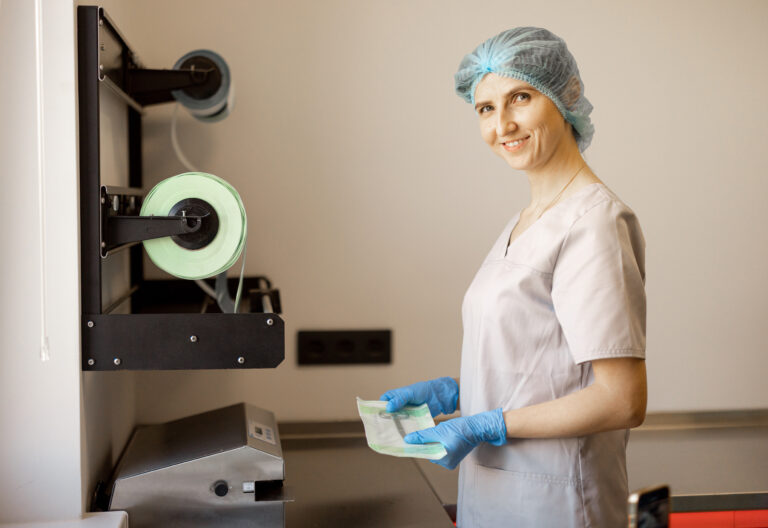
Once instrument sets are assembled, they must be packaged for sterilization. This packaging is designed to protect instruments and maintain sterility after the sterilization process is complete.
Most facilities use special sterilization wraps that are folded in a very specific way. The technique matters because operating room staff must be able to open the package without contaminating the contents inside.
Some hospitals use rigid sterilization containers instead of wraps. These are sealed systems with filters and locking mechanisms that provide extra protection.
In both cases, the goal is the same: maintain sterility until the instruments are needed.
This step further defines what does a sterile processing technician do, because it shows how attention to detail continues even after cleaning and assembly are complete.
Sterilization: The Core of the Process
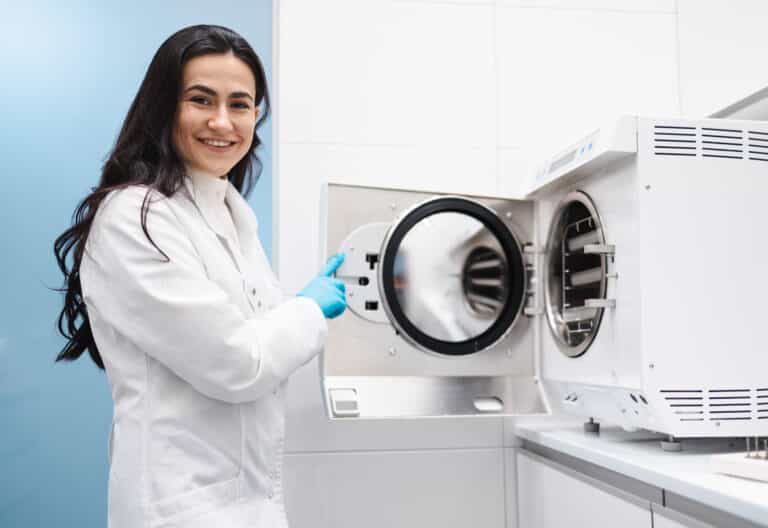
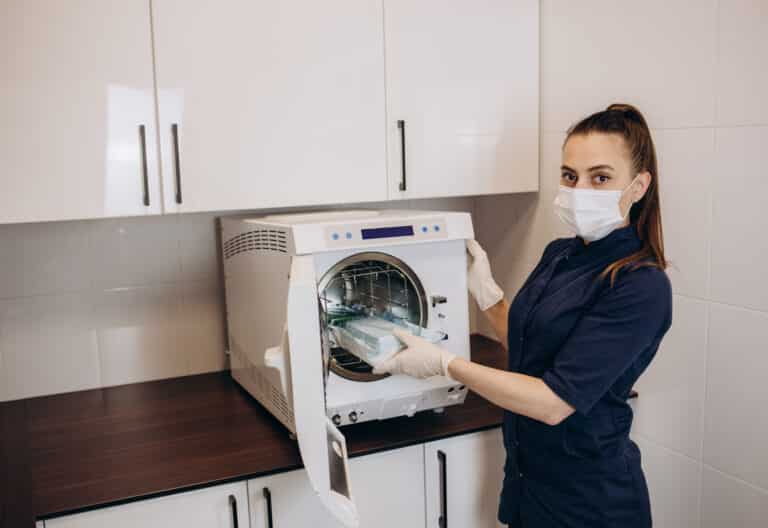
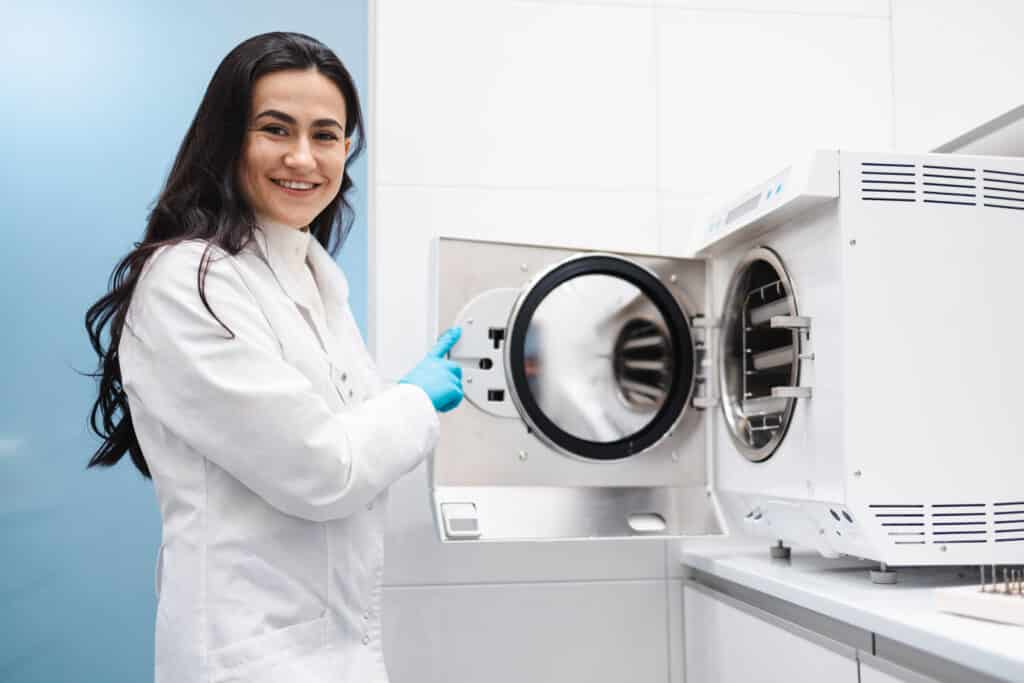
Sterilization is the step that gives the job its name. Once instruments are cleaned, inspected, assembled, and packaged, they are placed into sterilization machines.
The most common method is steam sterilization using an autoclave. These machines use high pressure, high temperature steam, and time to eliminate all microorganisms on the instruments.
However, not all instruments can tolerate heat. Delicate tools such as cameras or certain surgical scopes require low-temperature sterilization methods like hydrogen peroxide gas plasma.
At this stage, everything that has been done so far comes together. The earlier steps prepare the instruments, and sterilization ensures they are safe for patient use.
When explaining what does a sterile processing technician do, sterilization represents the critical transformation from contaminated tools to sterile medical equipment.
Quality Control and Documentation
After sterilization, technicians must verify that the process was successful. This is done through multiple quality checks.
They review sterilization cycle printouts that show temperature, pressure, and time data. They also check chemical indicators that change color if sterilization was successful.
Every tray is documented and tracked. This creates a traceable record so that hospitals can confirm whether instruments were properly sterilized at any point in time.
This documentation is not optional. Hospitals are regularly audited, and compliance with strict standards is required.
This part of the process is another key answer to what does a sterile processing technician do, because it highlights the importance of accountability and safety tracking in healthcare environments.
Case Cart Preparation
The final stage of the workflow is case cart preparation. This step connects the sterile processing department directly to the operating room.
Each day, the operating room sends a schedule that lists upcoming surgeries and the instruments required for each procedure. Technicians then select the correct sterile trays, add necessary supplies, and organize everything onto a case cart.
These carts must be ready on time and contain the correct instruments for each surgery. Hospitals often run multiple operating rooms simultaneously, so timing and accuracy are extremely important.
If a cart is incomplete or delayed, it can disrupt the surgical schedule and affect patient care.
This final step demonstrates what does a sterile processing technician do in a real-world hospital setting where coordination and precision directly impact the flow of surgeries.
Skills, Training, and Attention to Detail

Working in sterile processing requires a combination of technical knowledge and soft skills. Technicians must be detail-oriented, organized, and able to follow strict procedures consistently.
Sterile processing training programs typically teach infection control, sterilization science, instrument identification, and hospital regulations. This foundation prepares technicians to understand not just how to perform tasks, but why each step matters.
A strong training background is essential for anyone learning what does a sterile processing technician do, because the job depends on understanding both the science and the workflow behind instrument safety.
Career Environment and Work Settings
Sterile processing technicians can work in large hospitals, small surgical centers, or outpatient clinics. In larger systems, responsibilities may be more specialized, while smaller facilities may require technicians to handle multiple parts of the workflow.
Regardless of the setting, the core process remains the same. Instruments must always be cleaned, inspected, assembled, sterilized, and tracked with precision.
This consistency is what defines what does a sterile processing technician do across different healthcare environments.
Conclusion
Sterile processing technicians play a vital role in patient safety, even though they rarely interact with patients directly. Their work ensures that every surgical instrument used in a hospital is safe, sterile, and ready for use.
From decontamination to case cart preparation, each step is part of a continuous workflow that depends on accuracy and attention to detail. When you break it down fully, what does a sterile processing technician do becomes clear: they protect patients by managing the entire lifecycle of surgical instruments with precision and care.
It is a behind-the-scenes career that quietly supports every successful surgery, making it one of the most important roles in any healthcare facility.
Also Read: Surgical Technologists: Everything You Need to Know
About:
Preppy was founded by higher education expert Grant Aldrich, whose work on college affordability and accessibility has been featured in Forbes, Bloomberg Businessweek, Business Insider, American Express, AOL, MSN, Thrive Global, Reader’s Digest, Inside Higher Ed, Evolllution, EducationDive, and nearly 100 radio shows and podcasts.
Time is money. Instead of programs that could take 2 years, Preppy provides you with education in a few months through immersive online training.
Healthcare, IT, Business, Trades…Preppy gets you ready for the trending careers in our modern economy.
Our team of higher education and startup veterans has created the best solution so everyone can obtain the emerging careers of today and tomorrow.
We look forward to speaking with you. You may also call 800-729-1317.